Flexible CMS Software for Business Websites
Manage content, pages, users and digital workflows from one scalable platform
CMS SOLUTIONS

back
back
back
back
back
back
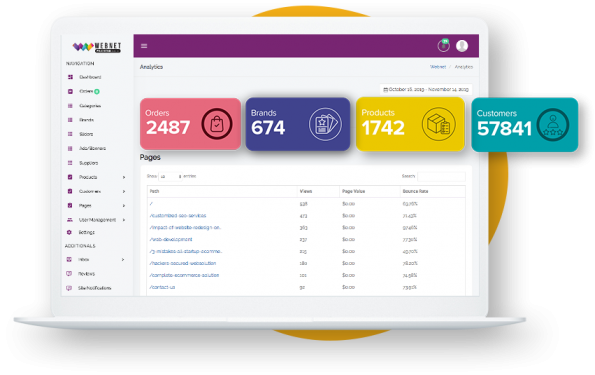
Webnet Pakistan CMS Solutions give organizations a structured way to manage website content, pages, media, navigation, users and publishing from one administration environment. Developed by Webnet Pakistan, the platform works as practical CMS software for business websites while remaining flexible enough to support different content structures and operational requirements.
A modern CMS is more than a text editor. Content teams need a clear publishing workflow, reusable page sections, media management, user access, forms, SEO controls, redirects, structured-data controls and reliable website administration. Bringing those functions together creates a stronger content-management foundation and reduces the need to handle routine website changes through source-code edits.
The same CMS architecture can support different business models. A corporate website may need controlled publishing and multiple administrators; another organization may need careers, lead management, product information, campaign pages, API integrations or specialized backend modules. Webnet can extend the platform around those requirements while keeping the content model and administration experience consistent.
Businesses that require deeply tailored modules, integrations or approval workflows can use our dedicated Custom CMS Development Services. For an educational explanation of how a Content Management System (CMS) works and the common types of CMS, our CMS introduction remains the informational resource.
Editors can create, update and organize website content through a structured administration interface instead of changing code for routine publishing. Pages, media, navigation and reusable content sections can be managed in a way that keeps everyday editorial work consistent across the website.
Modular Architecture & IntegrationsWebnet CMS is designed to be extended when a website needs more than standard content management. Custom modules, data fields, APIs and integrations can be connected to the same platform so new requirements do not automatically force a move to an unrelated system.
Users, Access & Content GovernanceBusiness websites often involve more than one person. User access, administrative responsibilities and content controls help keep publishing organized as teams grow. Where a project needs additional approval steps, activity tracking or business-specific permissions, those controls can be developed around the required workflow.
A capable CMS platform connects editorial work with the technical controls needed to operate a website. Webnet CMS can bring together page publishing, media, navigation, forms, users, SEO metadata, redirects, structured data and modular content within one administration layer. This gives content teams practical control over everyday website management while keeping the system extendable for developers.
The result is a clearer separation of responsibilities: editors can manage content and campaign information, administrators can control website operations, and developers can extend integrations or business modules without turning routine publishing into a development task.
These features describe the core content-management layer rather than a fixed feature ceiling. Standard publishing and administration can remain simple, while organizations with specialized workflows can extend the same platform through custom CMS development, modules and integrations.
Page and content publishing
Reusable content sections
Media and banner management
User access and administration
SEO titles and metadata
URL and redirect management
Structured data and schema controls
Menu and internal link management
Forms and lead capture
Activity and administrative controls
Image galleries and media content
Custom modules and integrations
API-ready business extensions
Extendable website administration


Business requirements change. New content types, integrations, data fields, forms and administration tools may be needed months or years after launch. A modular CMS architecture allows those additions to be developed around the existing platform rather than rebuilding the entire website-management system for every new requirement.
This long-term extensibility is particularly useful for organizations that expect their website to become more connected to marketing, customer service or internal business processes over time.

Good content management starts with a clear content model. Pages, sections, media, forms and repeatable information can be organized so editors understand where content belongs and how it is presented across the website. That structure helps teams maintain consistency as the amount of content grows.
Because the administration layer reflects the website itself, routine publishing remains understandable for non-technical users while developers retain control over the underlying implementation.
A managed CMS provides a central place for website administration and reduces the need to distribute routine content work across unrelated tools. User access, controlled code, updates, secure hosting and monitoring all contribute to a maintainable platform. Security remains an ongoing engineering responsibility rather than a one-time feature claim.
Content and marketing teams can manage pages, campaign information, media, forms, metadata, redirects and internal navigation without requesting a developer for every routine edit. Technical SEO controls and structured-data management can remain part of the wider administration workflow instead of being separated from the content being optimized.
As the website grows, the CMS can grow through additional content sections, users, forms, modules, APIs and integrations. This makes the platform useful beyond the initial launch because new business requirements can be introduced while retaining the same website-management foundation.
Share a few details and our team will review the right next step for your enquiry.